
Jewellery and Industrial Demand Explained Clearly
Gold and silver prices in India rarely sit still. One week they sparkle, the next week they test everyone’s patience. These movements are not random. They ripple through the Indian economy in very real ways.
When prices swing on the Multi Commodity Exchange of India (MCX), the impact travels far beyond trading screens. Jewellery showrooms feel it first. Factories feel it next. Consumers eventually feel it in their wallets.
This article explains how MCX gold and silver price movements influence India’s jewellery sector and industrial demand, without hype, fear-mongering, or guesswork. Just logic, facts, and trusted sources.
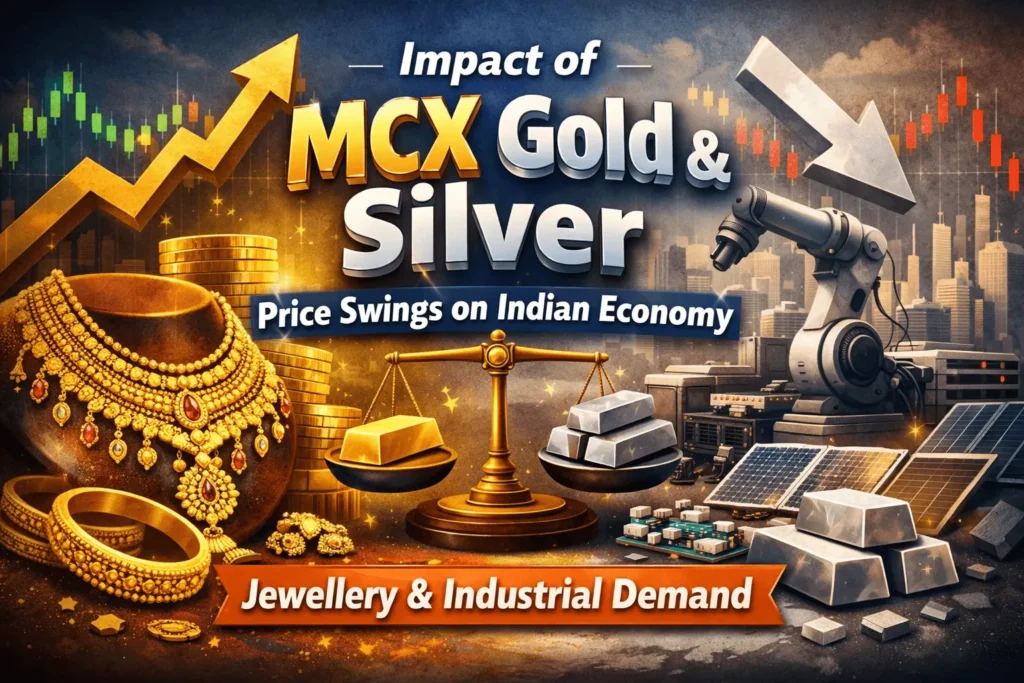
Why MCX Gold & Silver Prices Matter More Than Ever
MCX acts as India’s primary price discovery platform for bullion. Prices here reflect global cues, currency movements, and domestic demand expectations.
India does not treat gold and silver as just commodities. They sit at the intersection of culture, savings, manufacturing, and trade balance. When prices move sharply, decisions across multiple sectors change instantly.
Short answer:
MCX bullion prices quietly influence jobs, costs, margins, and consumption patterns across India.
Understanding Bullion Price Swings in Simple Terms
Gold and silver prices swing due to a combination of global and domestic factors:
- International spot prices
- US dollar strength
- Interest rate expectations
- Geopolitical uncertainty
- Import duties and taxes in India
These factors funnel into MCX prices daily. When volatility increases, downstream sectors must adapt quickly. Some succeed. Some struggle.
Impact of Gold Price Movements on India’s Jewellery Sector
Jewellery Pricing and Consumer Behaviour
Gold jewellery pricing in India tracks MCX gold prices closely. When prices rise sharply:
- Retail prices increase almost immediately
- Consumers delay discretionary purchases
- Lightweight and studded jewellery gains popularity
When prices soften, demand often revives. Wedding purchases return. Festive buying improves. This cycle repeats every year with impressive consistency.
The World Gold Council has repeatedly highlighted India’s sensitivity to price volatility, especially in rural and semi-urban markets.
Impact on Jewellers’ Margins
Jewellers operate on thin margins. Sudden price spikes create working capital pressure. Inventory becomes expensive overnight.
To manage this, many organised jewellers:
- Hedge gold prices on MCX
- Reduce inventory holding periods
- Focus more on making charges than metal value
Small jewellers feel the pressure more. They rely heavily on spot purchases and local demand flows.
Shift in Design and Product Mix
High gold prices change what people buy, not whether they buy.
Design trends during high-price phases include:
- Lower carat weights
- Minimalist designs
- Increased use of gemstones and alloys
This shift protects volumes but slightly alters profitability structures across the sector.
Silver Price Swings and Their Growing Industrial Importance
Silver no longer lives only in jewellery boxes. Its industrial role keeps expanding.
Industrial Demand for Silver in India
Silver plays a key role in:
- Electronics
- Electrical components
- Solar panels
- Automotive applications
India’s push toward renewable energy and electronics manufacturing has quietly increased silver consumption.
Price spikes on MCX silver affect production costs directly. Manufacturers cannot ignore them.
Manufacturing Costs and Profitability Pressure
When silver prices rise sharply:
- Input costs increase
- Profit margins compress
- Price pass-through becomes difficult
Unlike jewellery, industrial buyers cannot easily reduce consumption. Production needs remain fixed. This makes silver volatility more disruptive for manufacturers.
According to insights from the Silver Institute, industrial demand now accounts for more than half of global silver usage, making price sensitivity unavoidable.
MCX Bullion Prices and India’s Trade Balance
India imports most of its gold and a significant portion of silver. Price increases directly affect import bills.
Higher bullion prices can:
- Widen the current account deficit
- Pressure the Indian rupee
- Influence policy responses
The Reserve Bank of India closely monitors gold import trends for this reason.
This relationship explains why bullion prices often influence currency sentiment in India, even when other factors remain stable.
Jewellery Exports and Global Competitiveness
India exports gold jewellery to multiple markets. Price volatility affects export competitiveness.
When MCX gold prices rise faster than global benchmarks:
- Export margins narrow
- Order volumes slow
- Payment cycles stretch
Exporters rely heavily on hedging strategies to protect margins. Those without risk management frameworks struggle to compete.
How Industries Hedge Against Bullion Price Risk
Price volatility does not automatically mean losses. Prepared industries adapt.
Common risk management tools include:
- MCX futures and options
- Inventory rotation strategies
- Contractual price adjustment clauses
Large jewellery manufacturers and industrial buyers increasingly treat bullion price risk as a core business variable, not a background issue.
Employment and Skill Impact Across Sectors
Bullion price swings indirectly affect employment.
In jewellery manufacturing hubs:
- High prices slow production cycles
- Contract labour demand fluctuates
- Skill retention becomes challenging
In industrial sectors, cost pressures push companies toward automation and efficiency upgrades.
These shifts reshape workforce requirements over time.
Consumer Sentiment and Psychological Impact
Gold prices influence emotions as much as economics in India.
When prices surge:
- Buyers wait for corrections
- Sentiment turns cautious
- Savings shift toward alternatives
When prices stabilize:
- Confidence improves
- Festive demand rebounds
- Long-term buyers re-enter
This behavioural pattern remains remarkably consistent across decades.
What 2026 Signals for Bullion-Linked Sectors
Looking ahead to 2026, volatility will likely remain a feature, not a bug.
Key trends shaping the future:
- Higher industrial silver usage
- Smarter hedging adoption by jewellers
- Increased financialisation of gold demand
MCX prices will continue acting as the real-time signal that downstream sectors cannot ignore.
Key Takeaways for Businesses and Consumers
- MCX gold and silver prices influence far more than investors
- Jewellery demand adjusts, not disappears, during price spikes
- Industrial sectors feel sharper cost pressure from silver volatility
- Hedging separates survivors from strugglers
- Price awareness improves long-term decision-making
Bullion prices may glitter on charts, but their real impact shows up on factory floors, shop counters, and balance sheets.
Trusted Sources and References
- World Gold Council – Gold demand trends and jewellery insights
- Reserve Bank of India – Trade balance and import data
- Silver Institute – Industrial silver demand analysis
- Multi Commodity Exchange of India – Domestic price discovery mechanism
Final Thought
Gold and silver prices do not just move markets. They quietly reshape decisions across India’s economy. Understanding this connection turns noise into insight—and volatility into opportunity.
If markets had emotions, bullion would be the calm troublemaker. Always shining. Always stirring things up.